
Harvest 2023: Wild Merlot + Fools Rush In Pét-Nat
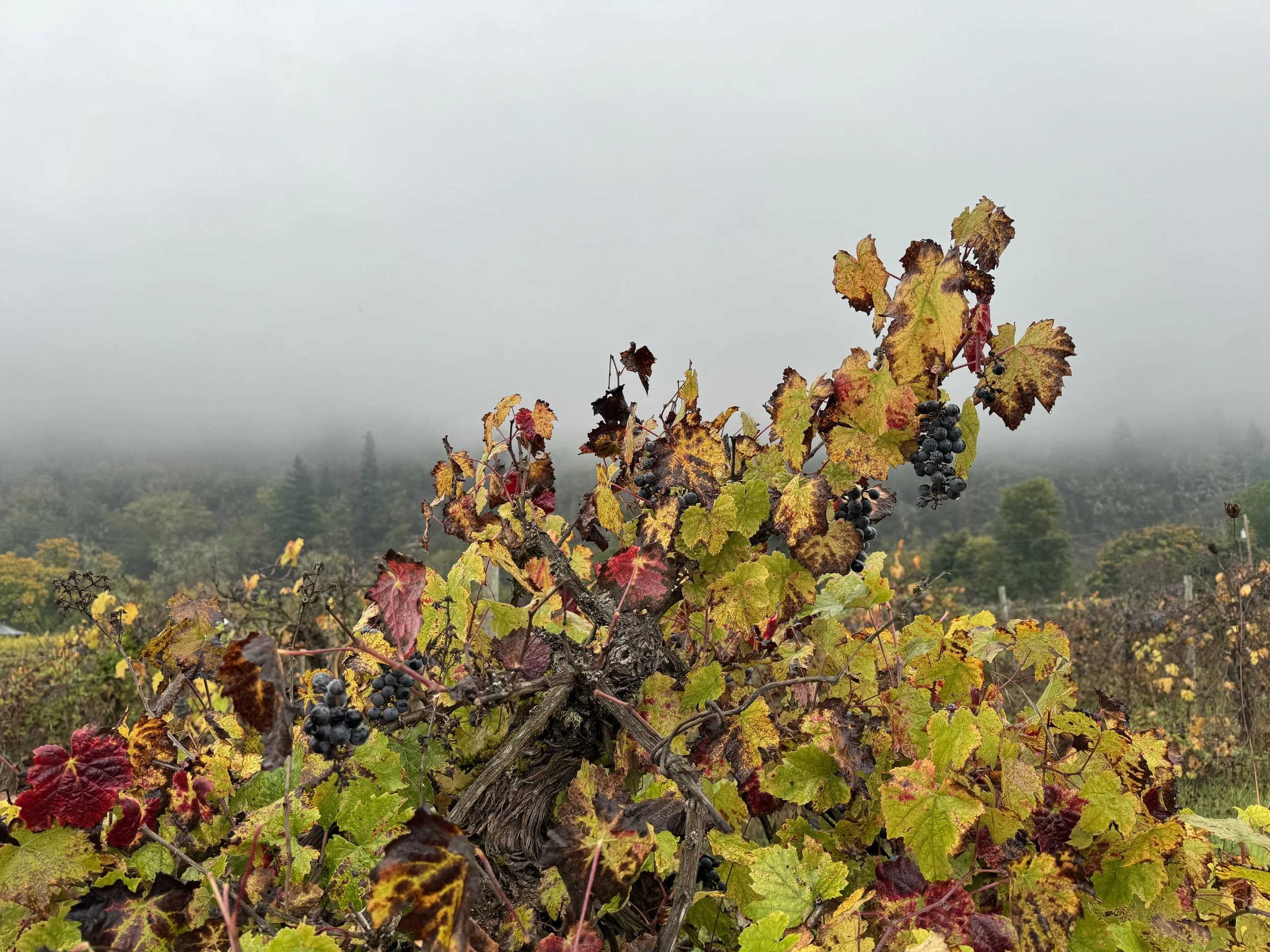
Wild Merlot on a foggy autumn morning.
While we were waiting for the Melrose Syrah, we had the opportunity to harvest some wild Merlot at Freed Estate for free. By wild, we mean it had been untended for a couple of years, so it had a mixture of ripe grapes on the primary vines and less ripe grapes growing on the secondary vines that would have typically been pruned rather than being allowed to grow. So the overall sugar content would be much lower than what you’d want it to be, and the acidity would be much higher. We decided to use it for a Pét-Nat.
Pét-Nat is a shortened nickname for pétillant naturale. It is the oldest style of sparkling wine and is sometimes referred to as méthode ancestrale. It is made by fermenting the wine so that there is still some sugar left to ferment, then bottling and capping it to trap the carbon dioxide that will still be produced, thus creating tiny bubbles. It can be sold pretty quickly after being bottled, unlike sparkling wines made in the méthode traditionnelle, such as Champagne or Cava—which are actually fermented to dry, then undergo a second fermentation in bottle, then are disgorged to remove sediment. The sediment left over in Pét-Nats are seen as proof of their natural wine cred to some people, and as proof of an inferior wine to others.
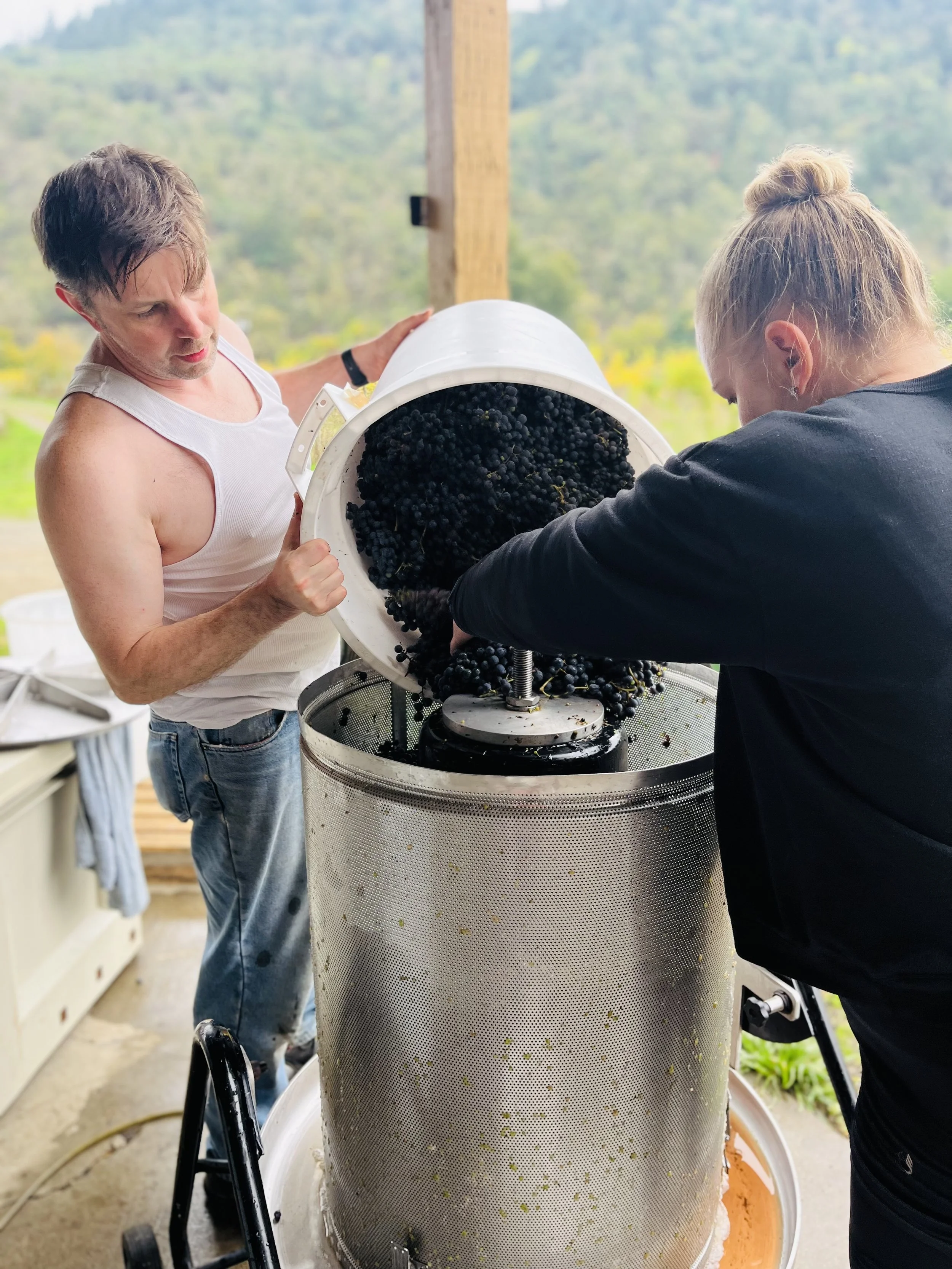
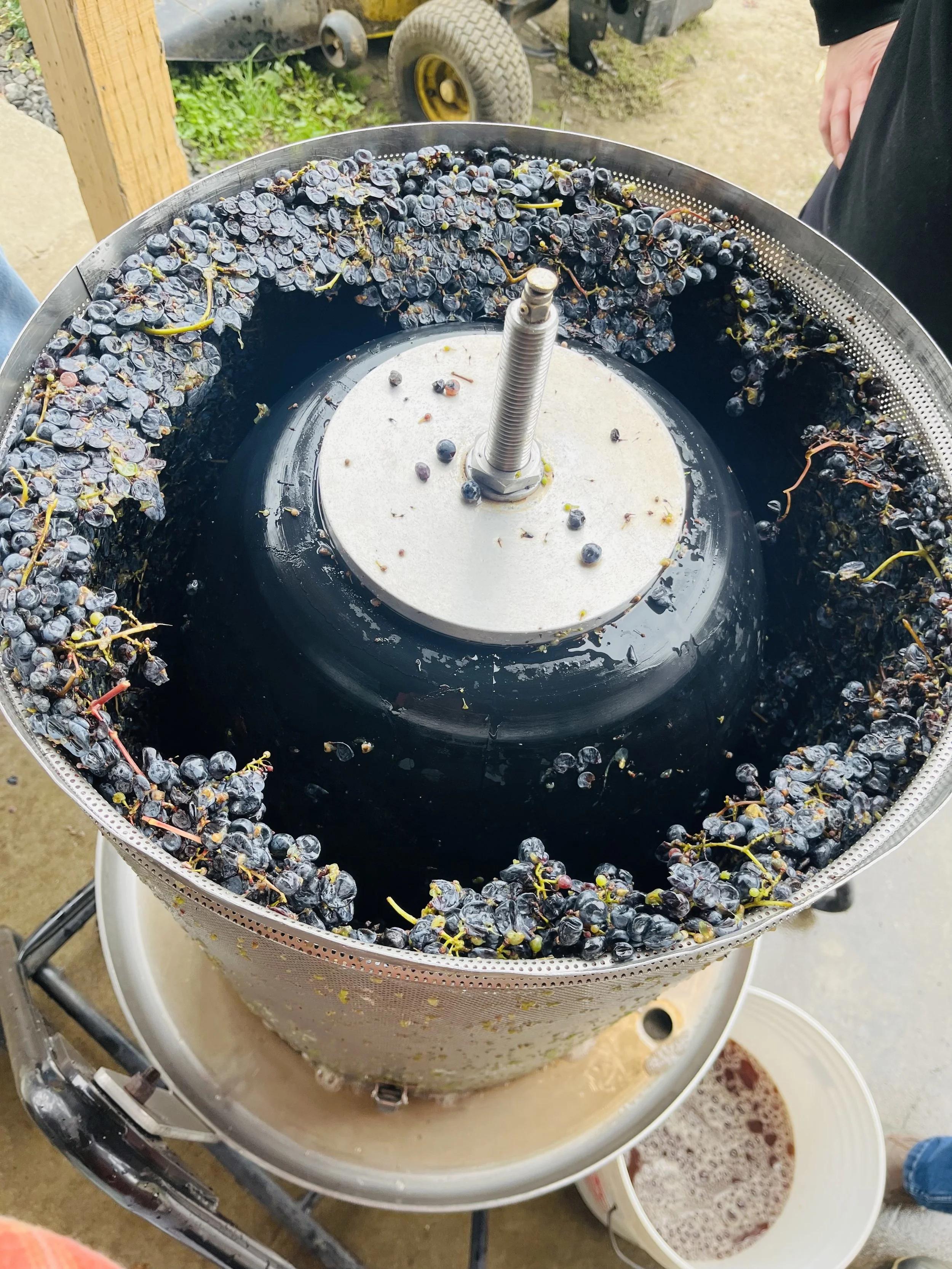
We had a lovely time picking the grapes and making this wine ourselves at the Freed Estate Winery. After having felt so constricted in making our other wines, it felt good to be able to do this the way we wanted. We did end up discovering that we couldn’t do a true Pét-Nat, because we couldn’t be there to monitor the fermentation closely enough. Trying to walk Candice’s mom through taking a brix reading via FaceTime was a hilarious process. So we decided we’d do the secondary fermentation, but we wouldn’t disgorge it, so it would be the illegitimate child of a traditional method wine and an ancestral method wine.
Here’s video of our little harvest being pressed:
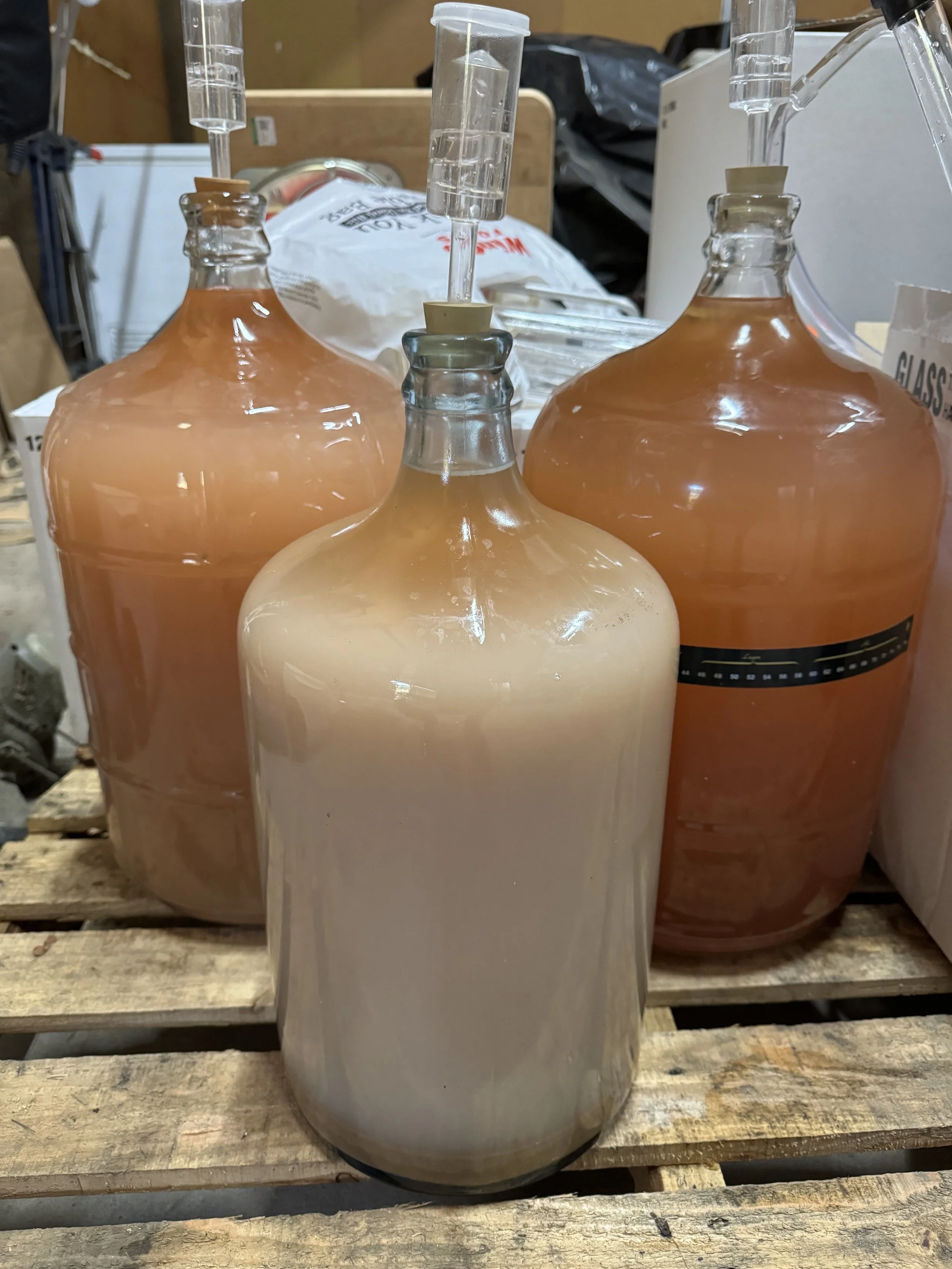
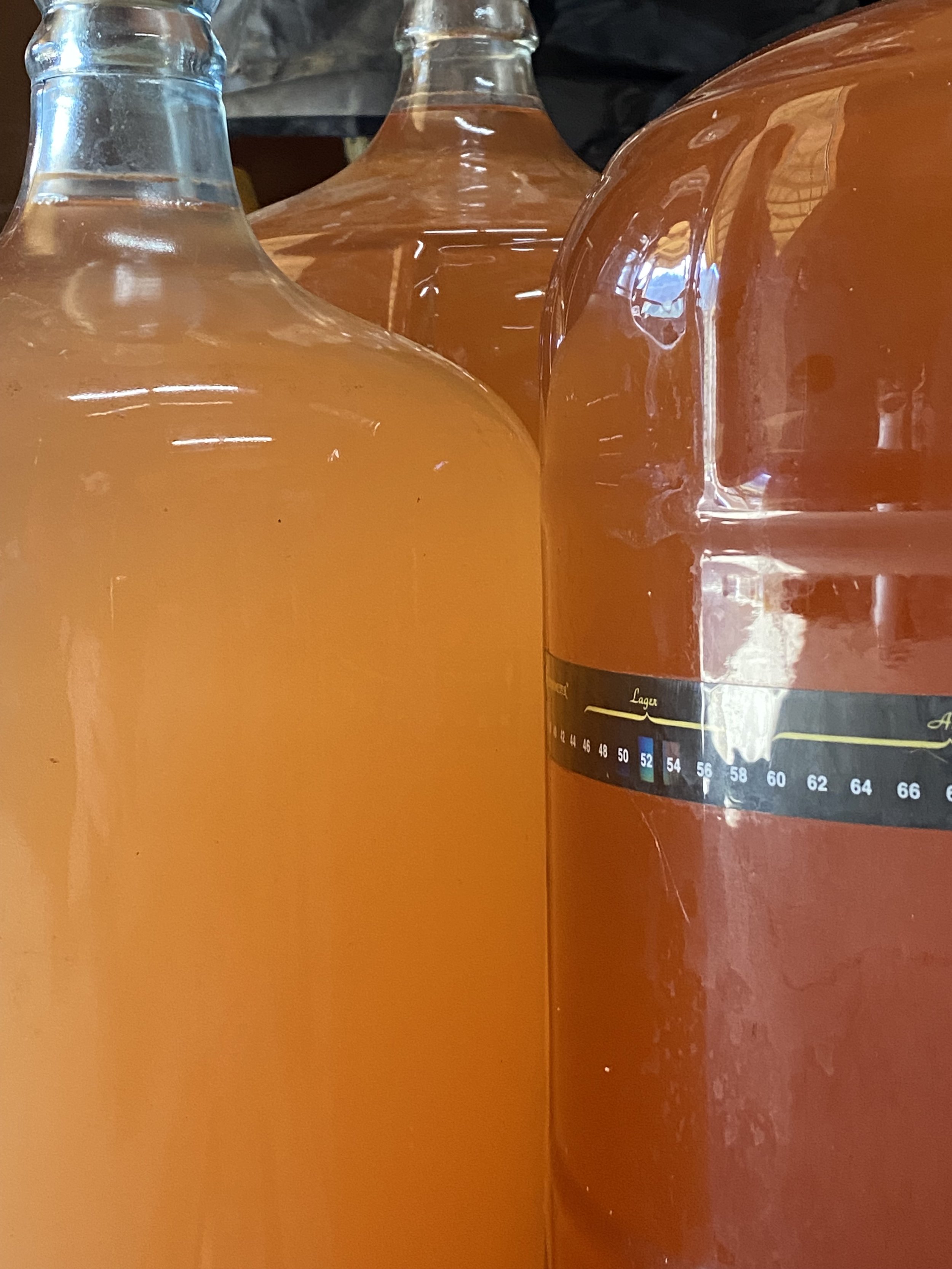
We initially fermented the wine in a steel barrel, then came back a week later and racked it to the carboys you see here. You can see how the wine started to settle and clarify throughout the ferment if you compare the photo on the left with the one on the right below. You can tell the order we racked it in too.
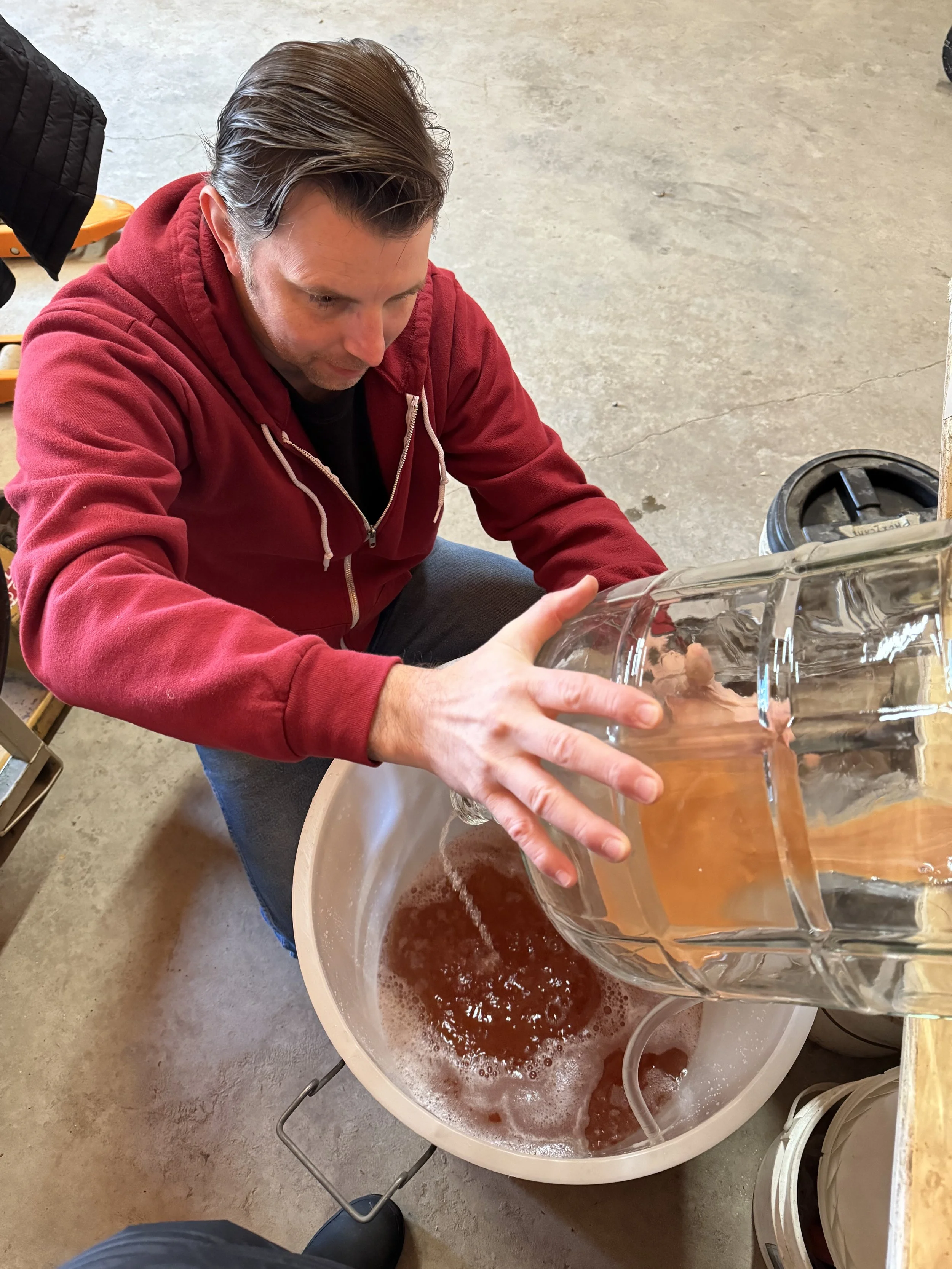
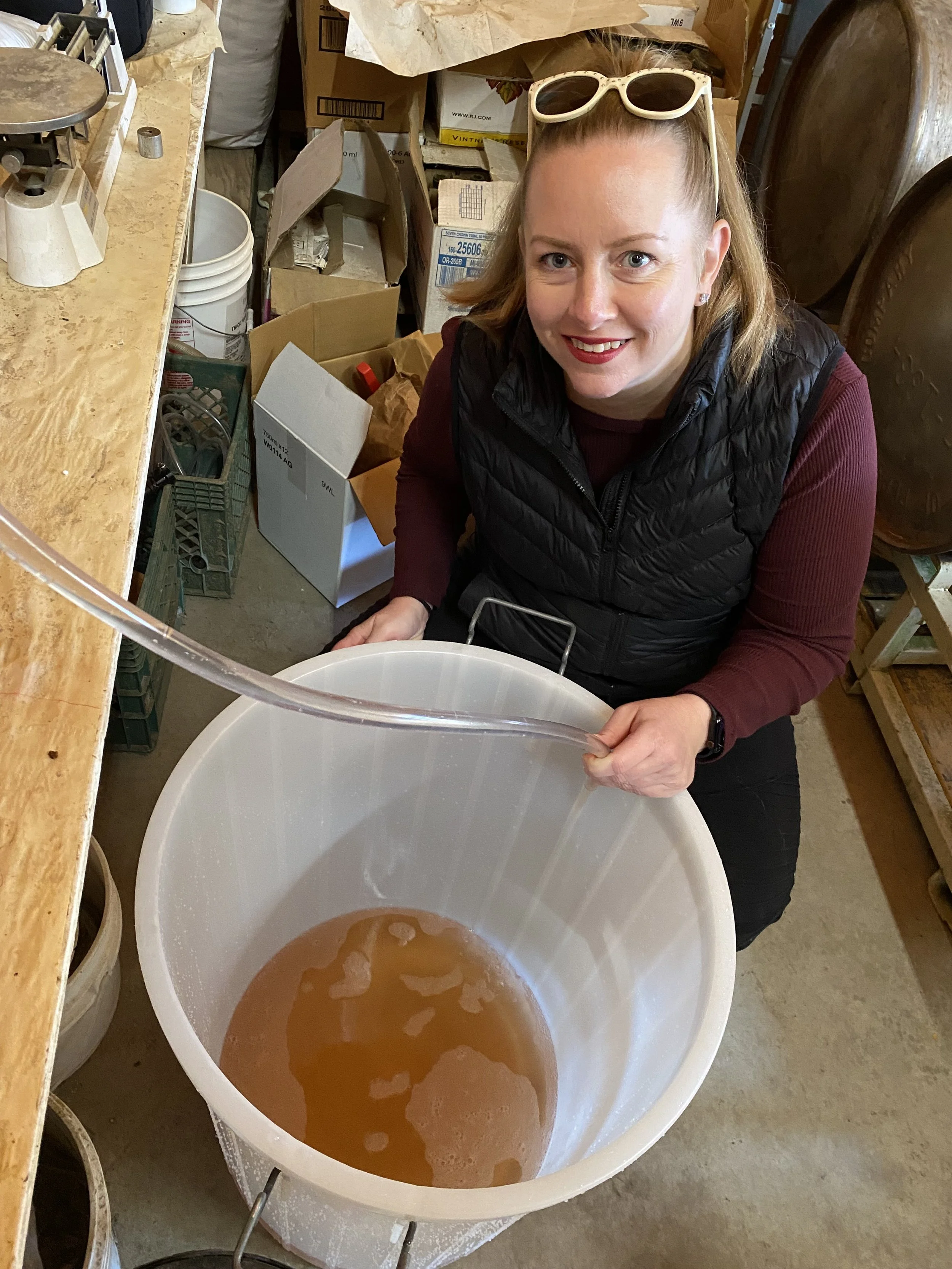
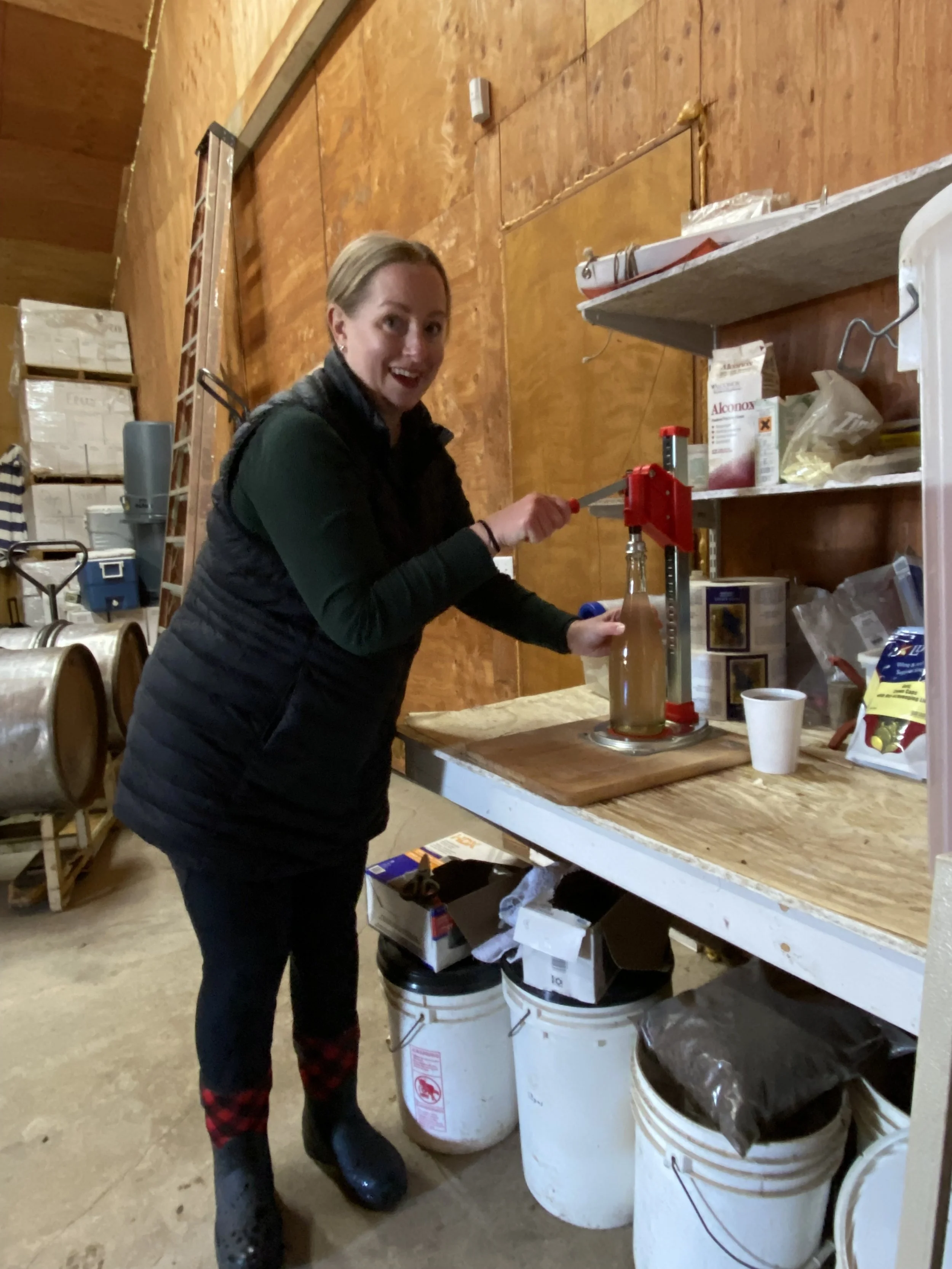
We came back to bottle it a few weeks later in a very bootleg operation. It was a very small batch, so even though we made do with some very rustic conditions, it wasn’t too bad of a process. The hardest part was finding sparkling wine bottles that were available in a reasonable quantity for our needs. There happened to be a shortage of supply at the time we were looking, but Steve pulled it off somehow. We also did some high-level math to figure out what to add to the bottles and how much to make it sparkle the right amount—enough to be enjoyable, but not so much that the cap would pop off or the wine would gush upon opening.
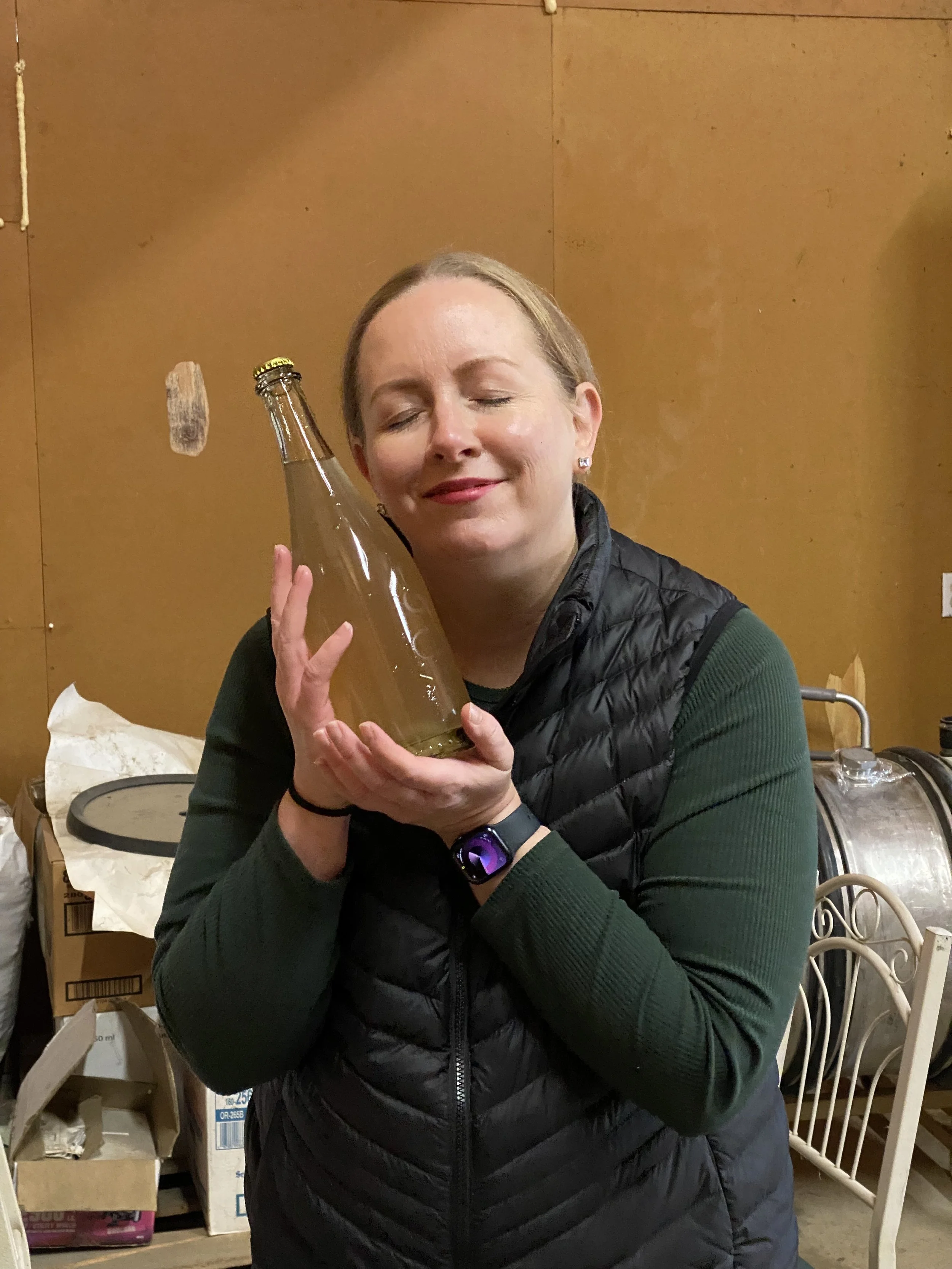
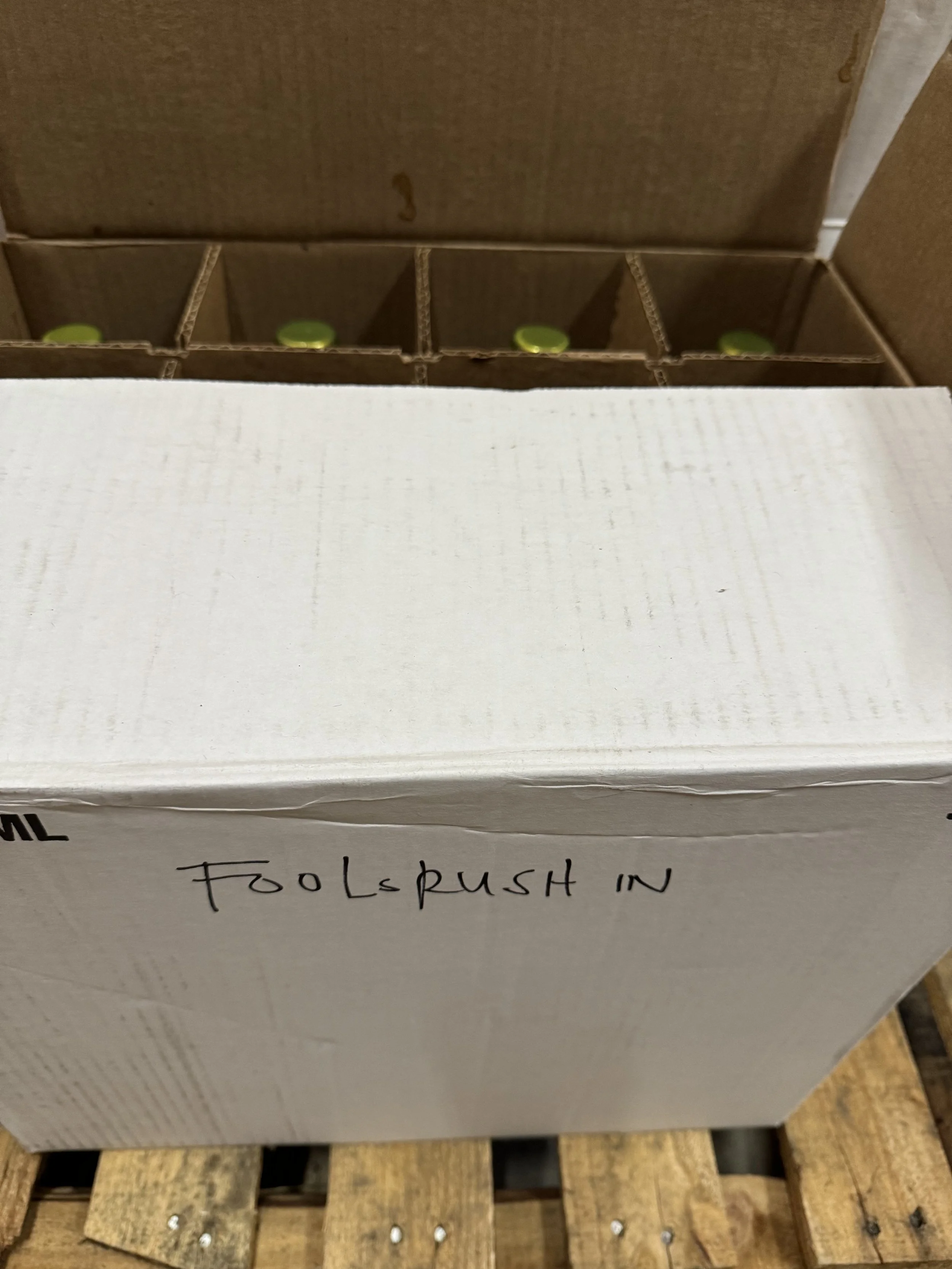
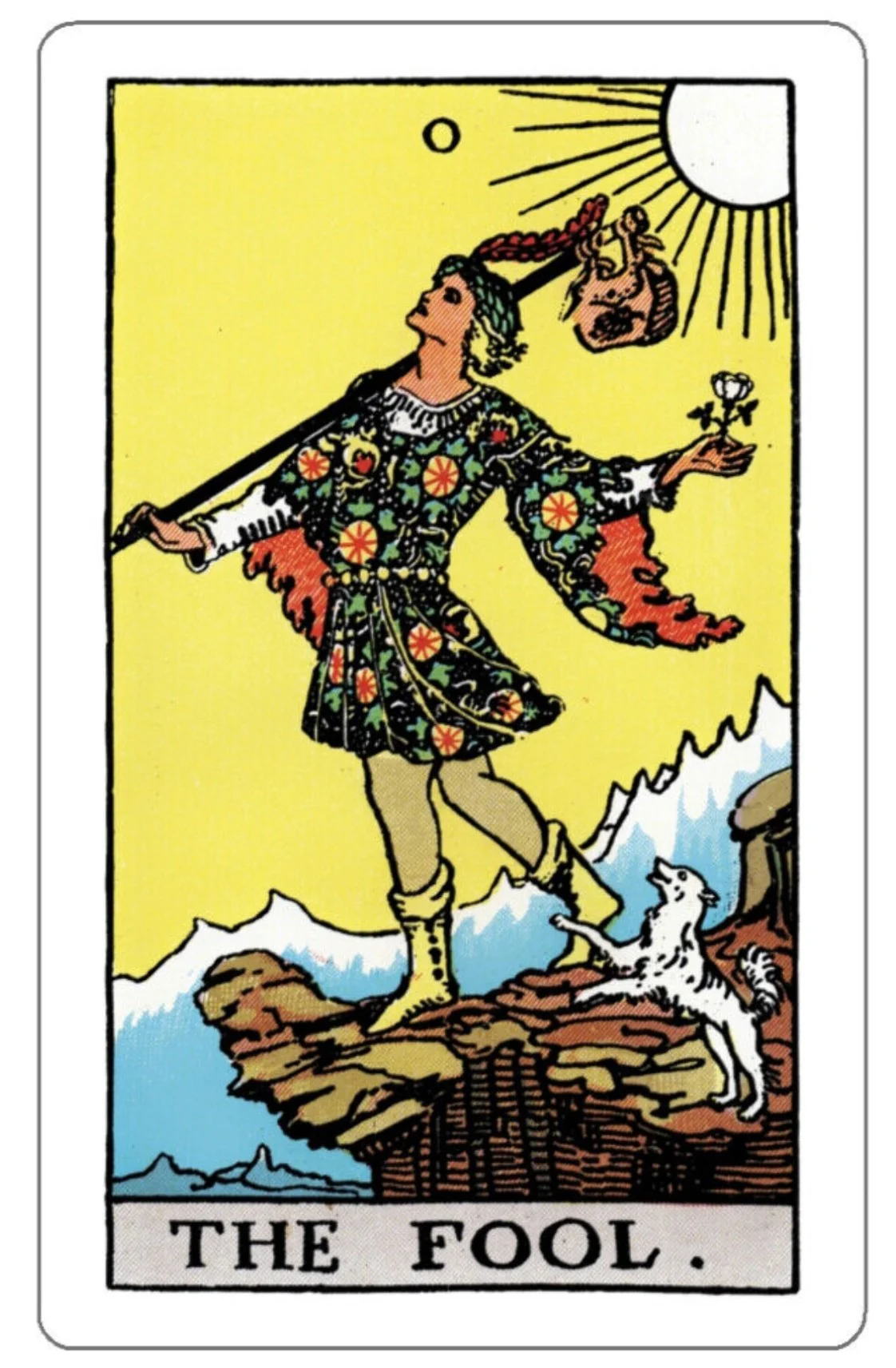
We decided to call the wine “Fools Rush In.” Candice heard a beautiful version of the song one day, and it brought tears to her eyes. It made her think about how foolishly she and Steve had jumped into love and wine, going against everything she thought she knew about relationships and business. She saw that her life was a completely different life than it had been a year ago, because she and Steve rushed in when things felt right. This wine feels like a celebration of that. Time will only tell how it all turns out.
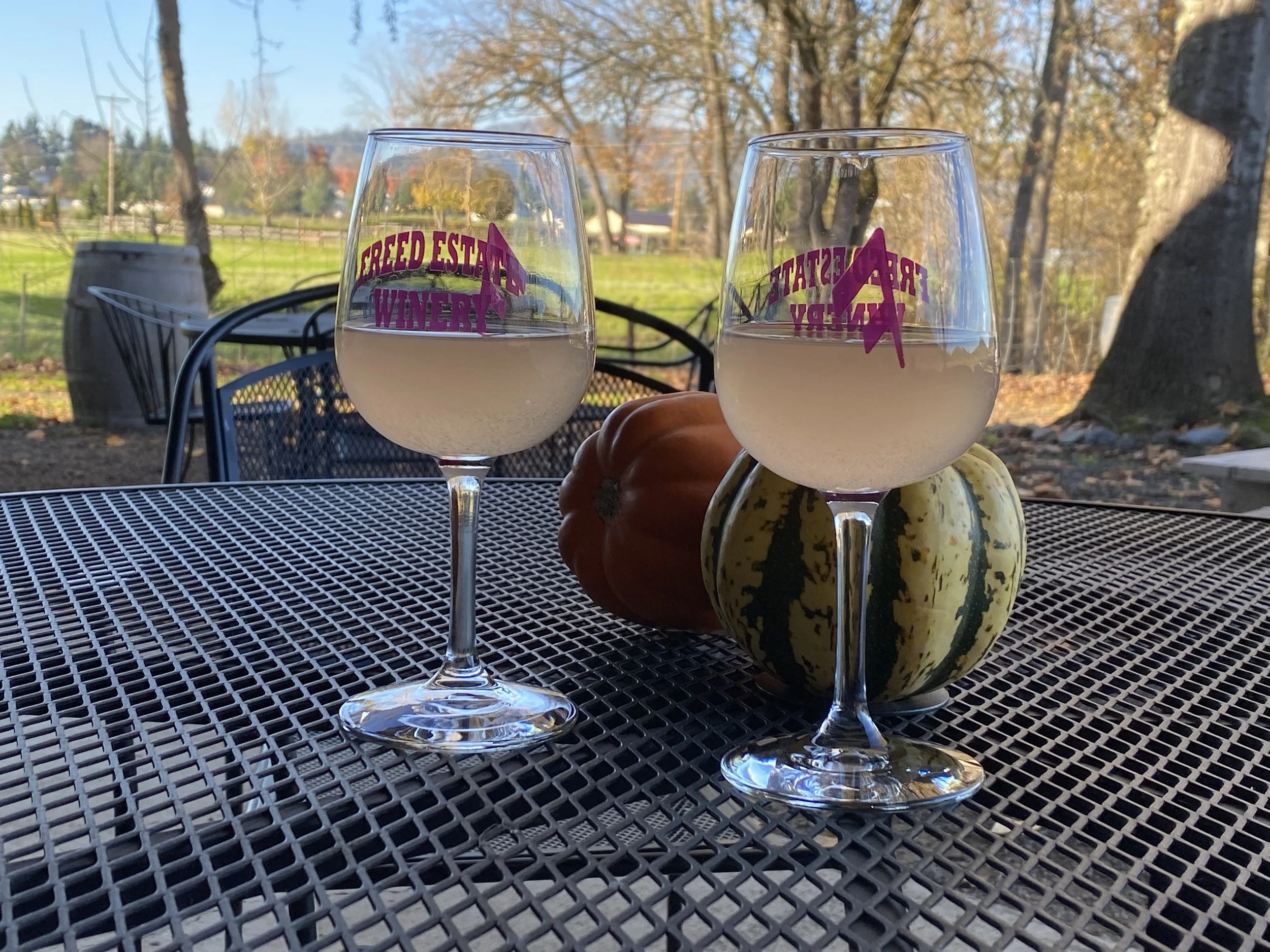
Our ‘Fools Rush In’ Pét-Nat Rosé, salmon-colored, a bit cloudy in the glass, aromas of mandarin orange, meyer lemon, key lime, a nearly ripe peach, and shortbread cookies. We’re really pleased with how it turned out.
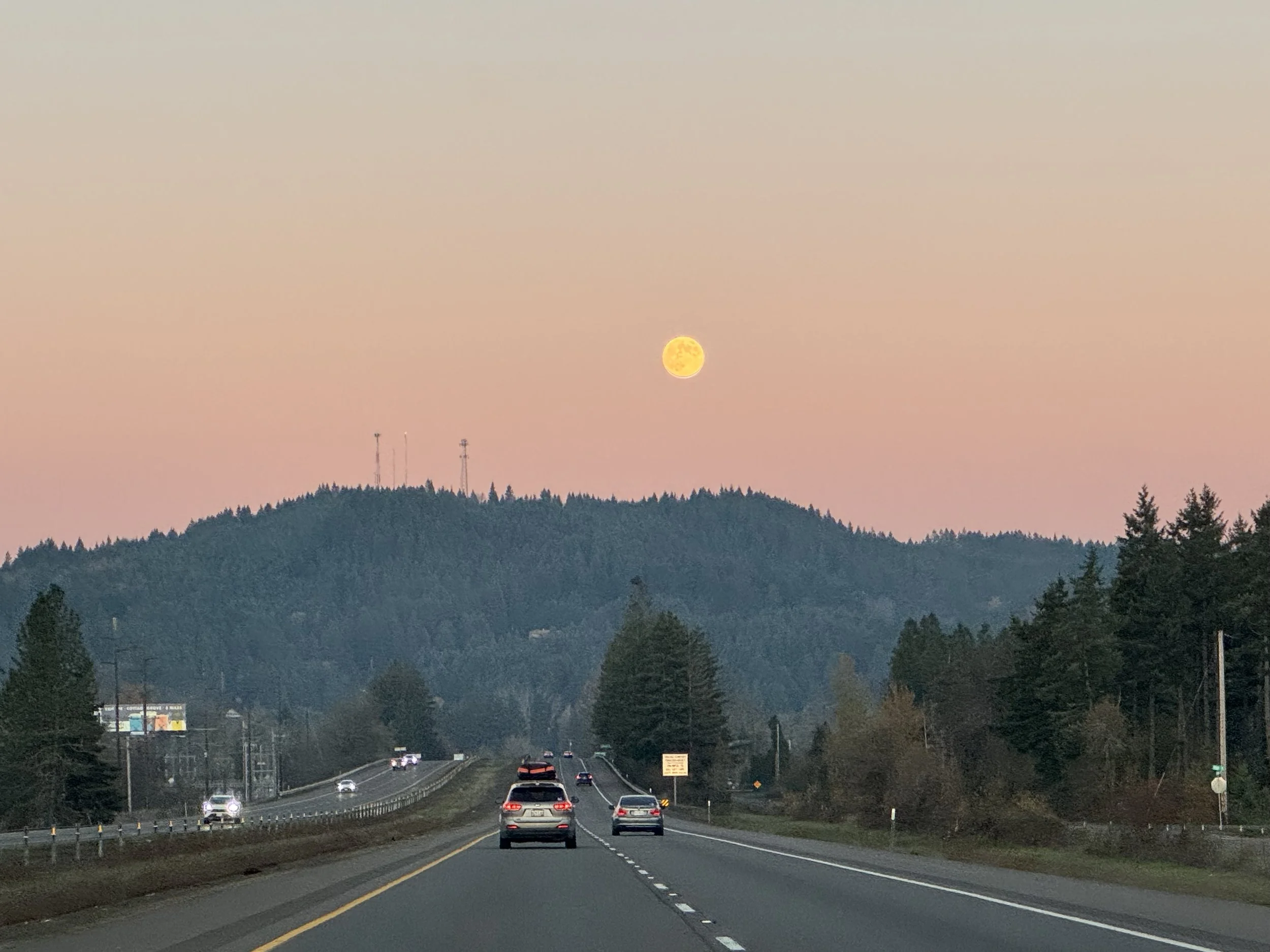
The sky and the moon driving home from bottling looks like our wine.
Here’s the song Candice listened to that gave her the name for our beloved first wine, Fools Rush In. It makes her tear up every time she hears it.
After spending our whole lives learning to be careful and cautious, it was these foolish, reckless decisions we made that changed everything for us.