
Smoke Taint
We learned that our Syrah has smoke taint. Candice definitely cried and yelled “fuck!!!” a bunch of times. The Syrah was what she wanted to make the most, and it has gone wrong at every turn. She wanted so much to make Syrah, to make it herself with Steve, to make it well, to make something her dad would be proud of. And that is not going to happen. Not this year, at least.
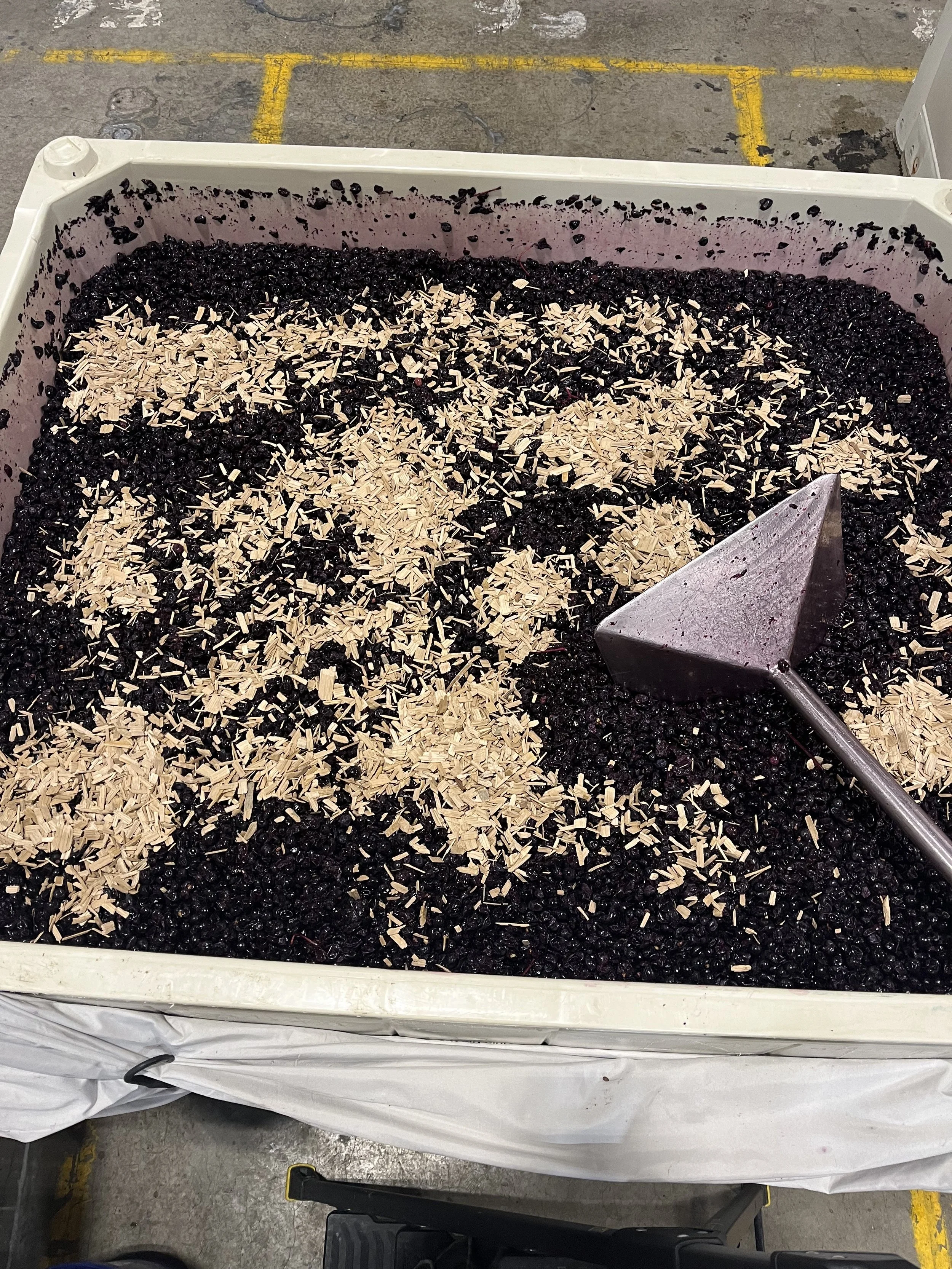
Untoasted oak chips in the ferment in hopes that they’ll etract some of the smoke taint volatile phenols.
What is smoke taint, you may ask. When grapes are exposed to smoke, usually during nearby wildfires, they can absorb volatile phenols from the smoke. Those volatile phenols can then bind to sugars in the grapes forming non-volatile phenolic glycosides. The volatile phenols can basically smell and taste like an ash tray. We’re not talking pleasant smokiness imparted from oak aging or anything like that. We’re talking about that time in 1980 when you grabbed a handful of cigarette butts out of your auntie’s ash tray and shoved them in your mouth. Hypothetically speaking. The worst part is that when the volatile phenols bind to sugars and form non-volatile phenolic glycosides, they’re like little ashtray sleeper cells. You might have no idea they’re in there, but the glycosides can break apart at any time and release the volatile phenols to wreak havoc, so a wine that smells and tastes fine when you bottle it might smell and taste like an ash tray down the road at some point. Not exactly what you want your name on out there.
There are some people in Oregon who have dealt with smoke tainted grapes in recent years. We were lucky enough to get advice from a winemaker in Southern Oregon who has dealt with this before. There are even more winemakers in California that have dealt with smoke taint for years now, but it’s the Australians who have been dealing with this for decades now, and they have a protocol down.
Here’s a page the Australian Wine Research Institute has put together about dealing with smoke taint, if you’re interested. https://www.awri.com.au/industry_support/winemaking_resources/smoke-taint/
One of the first things we did was dump a bunch of untoasted oak chips into the ferment. Just as toasted oak can impart compounds into the wine (think baking spice aromas—vanilla, cloves, nutmeg), untoasted oak can absorb compounds from wine into the wood, including smoke taint molecules. Imparting fruitiness and sweetness is important to counterbalance the smoke flavors, so using a yeast strain meant to produce fruity esters and pressing before fully dry are good options. Pressing lightly to avoid unnecessary phenolic extraction is a good idea too. We did all these things and more.
We even did carbon trials and added a small amount of activated carbon to the wine to extract some of the volatile phenols. The downside of treating the wine with activated carbon is that it takes away some of the positive attributes of the wine—flavors, body, and color.
It’s all a bummer, but by the time we got to the carbon trials, we had already grieved the wine and were happy for the science experiment.